Guide
What is a risograph print?
How a risograph works: one drum per colour, soy-based inks, layered passes, grain and slight misregistration. Why riso art prints look the way they do, and how to choose one.
A risograph is a stencil duplicator made by the Japanese company Riso Kagaku, introduced in the 1980s for schools and offices that needed thousands of cheap copies. Artists and small presses adopted it because its colours are flat, bright and a little unpredictable.
How it prints
The machine burns the image into a thin master sheet with tiny heat points, wraps the master around an ink drum and pushes ink through the holes onto paper. Each drum holds one colour. A two- or three-colour riso print goes through the machine two or three times, once per drum.
Why riso looks hand-made
- Flat, fixed colours. Riso inks come in set colours (blue, bright red, yellow, fluorescent pink, green and more) rather than mixed process colours. Where two inks overlap they make a third.
- Grain. Tones are built from a fine dot or grain pattern, which gives a soft, printed surface.
- Misregistration. Every pass lands a fraction of a millimetre differently, so colour edges shift slightly. On a riso print that is part of the look, not a mistake.
Old pictures, riso colours
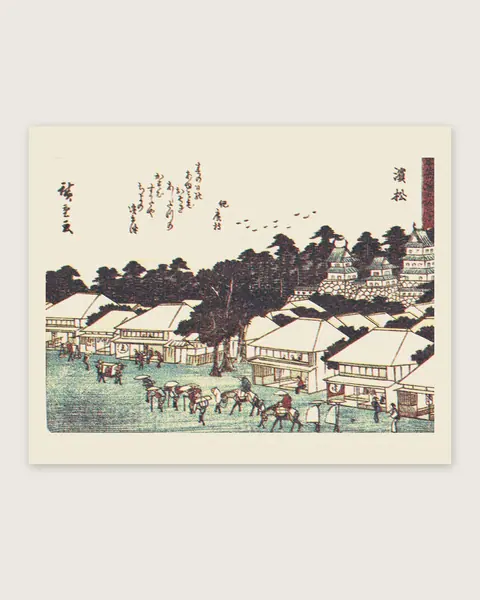
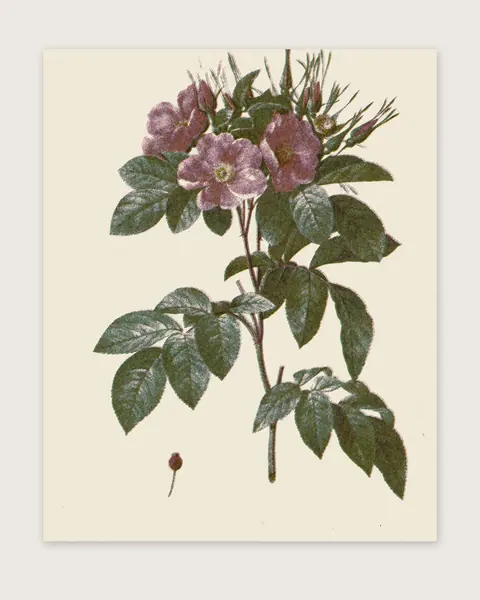
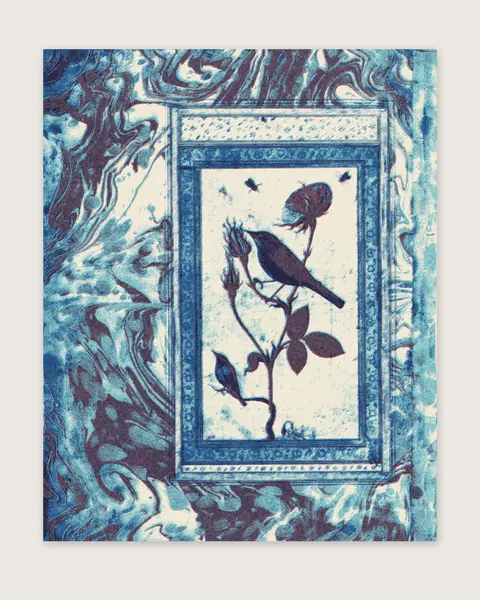
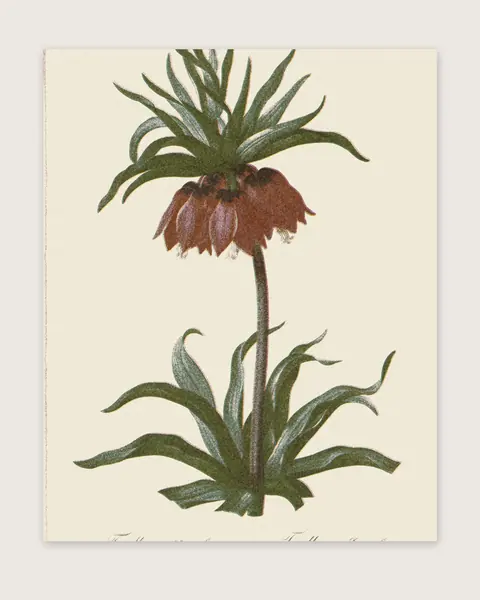
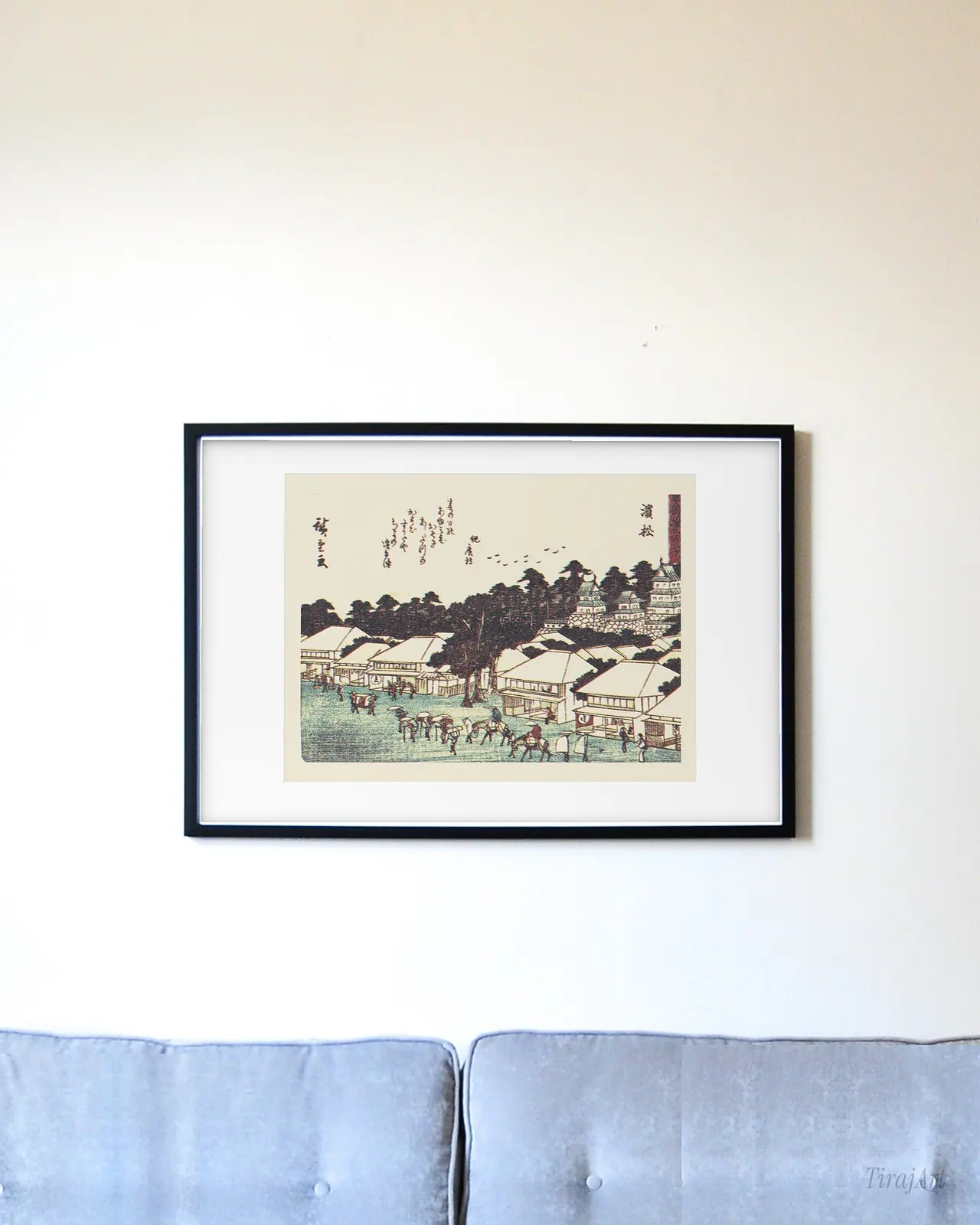
Woodblock prints and botanical plates suit the riso because they were already built from flat areas of colour. Our Hamamatsu (Tokaido with Poem) separates a Tokaido station into blue, bright red and yellow; Pasture Rose prints a Redouté rose in hunter green, sunflower and burgundy; A Mosque turns an Istanbul street into Iznik blue and red.
How our riso prints are made
We do not run a machine. Each print is made in Tiraj, our own printmaking software, from a public-domain museum image: it separates the picture into two or three riso drum colours, adds the grain and a slight misregistration, and lays the inks on a cream sheet. You print the file at home or at a print shop on white matte paper.